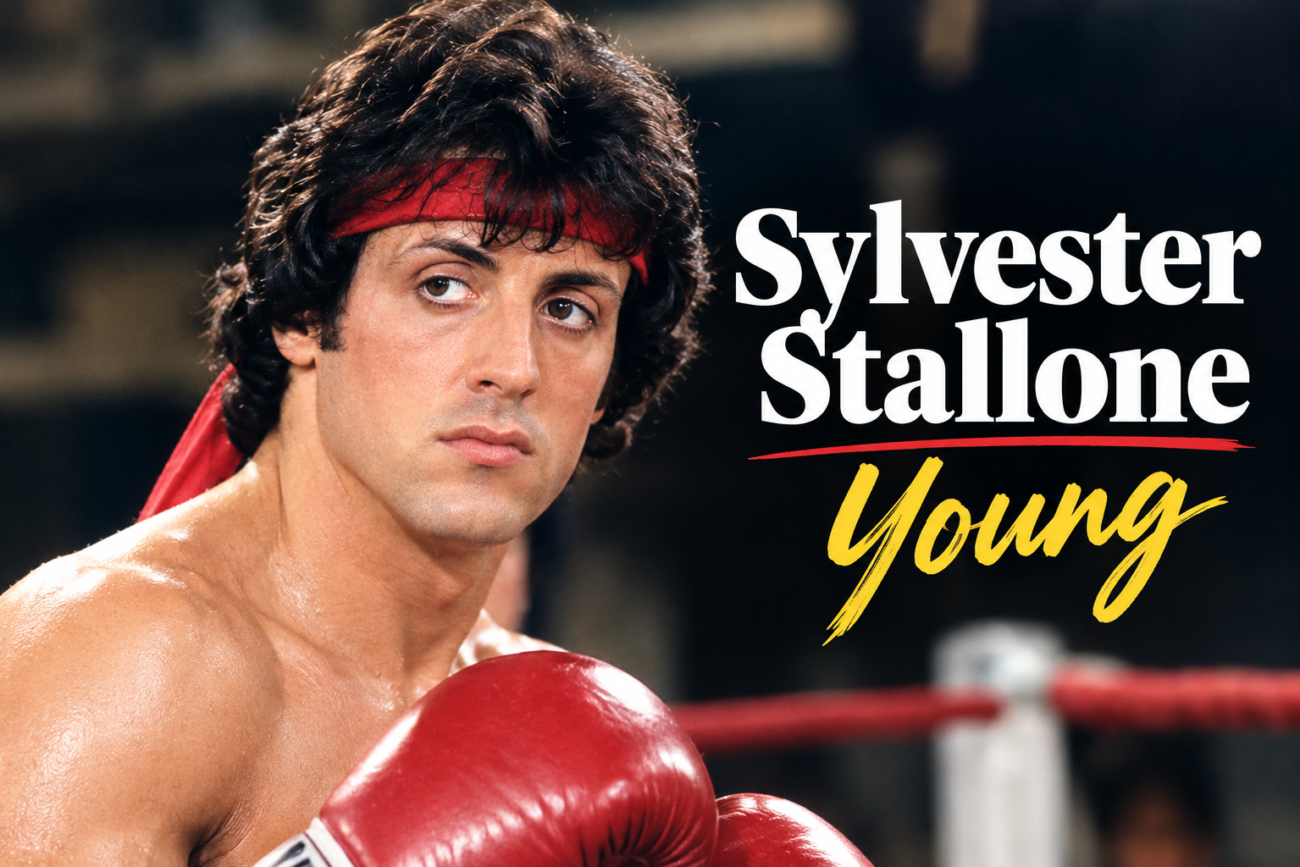
Sylvester Stallone is one of Hollywood’s most recognizable action stars, but his journey to international fame began long before he became famous as Rocky Balboa. When people search for Sylvester Stallone young, they are often interested in his appearance during the original Rocky era, his early acting career, his muscular physique, childhood, hairstyles, and transformation into the legendary character John Rambo. Born on July 6, 1946, Stallone spent years facing acting rejections and financial difficulties before Rocky became a major success in 1976. He was 29 during the film’s production, and his determination to write the screenplay and play the lead role helped turn him into one of the defining stars of American action cinema.
Sylvester Stallone Quick Bio
| Detail | Information |
|---|---|
| Full name | Sylvester Gardenzio Stallone |
| Date of birth | July 6, 1946 |
| Age in 2026 | 80 years |
| Birthplace | New York City, United States |
| Nationality | American |
| Profession | Actor, screenwriter, director and producer |
| Breakthrough movie | Rocky (1976) |
| Famous characters | Rocky Balboa and John Rambo |
| First Rocky film | Released in 1976 |
| Famous action franchise | Rambo |
| Known for | Boxing films, action movies and muscular physique |
| Awards | Academy Award nominations and a Golden Globe win |
Sylvester Stallone Young Rocky: The Beginning of a Hollywood Legend
The year 1976 marked a turning point in Stallone’s life. Before Rocky became an international hit, he was a struggling actor who had appeared in a handful of films and was still trying to establish himself in Hollywood. Instead of waiting for a major opportunity, he wrote a screenplay about an ordinary boxer who receives an extraordinary chance to fight the heavyweight champion.
Stallone wanted to play Rocky himself. Producers were interested in his script but preferred casting a more established star. He refused to give up the leading role, even when doing so meant turning down money that could have improved his difficult financial circumstances.
The film began shooting on January 9, 1976, and was made on a modest budget. Its realistic Philadelphia locations, memorable training scenes, and emotional story helped distinguish it from larger Hollywood productions. At the Academy Awards in 1977, Rocky won three Oscars, including Best Picture.
Stallone also received nominations for Best Actor and Best Original Screenplay. His achievement was unusual because he had written the story and portrayed its central character. The film transformed his professional life and established Rocky Balboa as one of cinema’s most enduring underdogs.
Read More: Mark Wahlberg Net Worth 2026: Salary, Houses, Wife, Business Ventures and Wealth Growth
Sylvester Stallone Young Body and Physique
Sylvester stallone young physique became an important part of the original Rocky film. Unlike the exaggerated muscular bodies associated with some later action movies, his appearance in 1976 was relatively lean and athletic, suited to the character of a working-class boxer.
For the role, Stallone reportedly trained for approximately six hours a day over five months. His preparation involved running, boxing exercises, weight training, push-ups, and conditioning. The goal was to develop the stamina, movement, and physical presence of a believable fighter.
The training was demanding, but it contributed to the film’s authenticity. Rocky’s body was not presented simply as a symbol of strength. It represented years of physical labor, perseverance, and a desire to prove himself.
Stallone’s physique also changed the way audiences perceived him. His broad shoulders, powerful arms, and athletic frame became part of his screen identity, while his distinctive facial features gave him an appearance different from many traditional leading men.
As his career progressed, he became more muscular for later Rocky films and the Rambo franchise. These transformations reflected the different physical demands of his roles rather than one fixed body type.
Sylvester Stallone Young Bodybuilding and Workout Routine
Stallone’s interest in physical training began before he achieved major success in movies. Exercise offered a way to build confidence and develop discipline during a period when his acting career was uncertain.
His preparation for Rocky combined cardiovascular training with boxing practice and resistance exercises. Running helped build endurance, while punching bags, shadowboxing, and footwork drills helped him develop the movements required for boxing scenes.
Weight training became increasingly important as he took on more physically demanding roles. His later movie appearances emphasized muscular development, visible definition, and the ability to perform convincing action sequences.
Sylvester stallone young approach helped popularize the idea that an actor could change his physique substantially for a film. His training scenes also became famous in their own right, particularly Rocky’s early-morning runs and his climb up the steps of the Philadelphia Museum of Art.
However, the physique seen on screen should not be treated as a simple fitness prescription. Actors train under specific conditions for particular roles, and their appearances can be influenced by lighting, diet, choreography, professional coaching, and other production factors.
Sylvester Stallone Young Actor Before Fame
Before becoming an international star, Stallone experienced a difficult beginning in the entertainment industry. He appeared in small roles and struggled to find consistent work. His early credits included Bananas (1971) and The Lords of Flatbush (1974).
These appearances gave him experience but did not immediately bring widespread recognition. He continued auditioning, writing scripts, and looking for opportunities that would allow him to demonstrate his abilities.
Writing became particularly important because it gave him greater control over the roles he pursued. Rather than relying entirely on casting directors, he could develop stories featuring characters that matched his strengths and personal experiences.
The creation of Rocky became the decisive moment in this process. His insistence on playing the title character demonstrated that he was willing to take considerable professional and financial risks to achieve his ambition.
His success is often described as an underdog story similar to Rocky’s fictional journey. Sylvester stallone young Both the character and the actor faced rejection before receiving an opportunity to prove themselves.
Sylvester Stallone Young Childhood and High School Years
Stallone was born in New York City on July 6, 1946. Complications during his birth damaged a facial nerve, leaving part of his face with limited movement and contributing to his distinctive speech.
His childhood was challenging, and he later spoke about difficult family experiences, bullying, and problems at school. Sylvester stallone young He spent time in different schools and eventually continued his education in Philadelphia.
Sylvester stallone young early difficulties influenced the way he approached acting and storytelling. He became interested in characters who were underestimated by others but possessed the determination to continue fighting for a better future.
Rocky Balboa reflects many of these themes. The character is not presented as a perfect athlete or an exceptionally gifted intellectual. Instead, he is someone who continues trying despite limited opportunities and a lack of recognition.
Sylvester stallone young later studied drama at the University of Miami before pursuing acting more seriously. His education and early work helped him develop the skills needed to write and perform his own material.
Sylvester Stallone Young Portrait, Pictures, and Early Appearance
Young Sylvester Stallone photographs remain popular because they capture the period before he became one of the world’s most recognizable action stars.
Images from the 1970s often show him with dark hair, a relatively lean face, and an athletic build. Photographs from the original Rocky production also reveal the understated clothing and everyday appearance used to establish Rocky Balboa as an ordinary working-class man.
Publicity portraits, boxing-ring stills, and behind-the-scenes photographs provide different perspectives on his early career. Some emphasize his serious expression, while others capture the physical preparation required for the film.
When comparing these pictures, it is useful to consider the year in which each photograph was taken. An image from 1976 represents a different stage of his career from a photograph taken during the later Rambo movies.
For blog publishers, dated film stills and authorized publicity photographs are preferable to images with unclear origins. Copyright permission should always be checked before publishing a photograph.
Sylvester Stallone Young Beard and Hair
Stallone’s hairstyles changed throughout his career, helping distinguish his characters and the different periods of his life.
During the original Rocky era, he generally wore dark hair in a relatively simple style. The look suited a character whose life revolved around training, working, and surviving in Philadelphia rather than maintaining a glamorous appearance.
The Rambo films introduced a more rugged image. Longer hair, headbands, and facial hair helped create the appearance of a soldier living in difficult outdoor conditions.
In later years, Sylvester stallone young experimented with shorter hairstyles, different beard styles, and more polished red-carpet appearances. His evolving appearance became part of his broader public image, alongside his muscular build and distinctive facial expression.
These changes were closely connected to the characters he played. Hair and facial hair helped communicate a character’s background and personality without requiring extensive dialogue.
Sylvester Stallone Young Rambo: From Rocky to Action Hero
Stallone introduced audiences to John Rambo in First Blood (1982). The role was different from Rocky Balboa, even though both characters displayed extraordinary determination.
Rocky was a boxer seeking recognition, while Rambo was a former soldier struggling to adjust to civilian life. The character’s physical conditioning, survival skills, and troubled background gave Stallone a new kind of leading role.
His appearance in First Blood was lean and rugged, emphasizing mobility and endurance rather than simply muscular size. The film’s success led to further installments and helped establish Stallone as one of the leading action stars of the 1980s.
The Rocky and Rambo franchises together demonstrated his ability to build two very different screen identities. One centered on sporting ambition and emotional resilience; the other explored combat, survival, and the consequences of war.
Both characters became major parts of popular culture and helped sustain Sylvester stallone young career across several decades.
Sylvester Stallone Young vs. Old: How He Changed Over Time
Comparing young and older Stallone reveals changes in his hairstyle, facial appearance, physique, and acting style. In the 1970s, he was a relatively unknown actor whose defining performance came from portraying an underdog boxer.
During the 1980s, he developed a more muscular appearance and became closely associated with action films. His roles increasingly required physical conditioning, stunt work, and demanding fight sequences.
In later decades, he continued returning to established characters while also taking on different roles. The Creed films revisited Rocky Balboa as an older trainer, allowing Stallone to explore the character’s vulnerability, experience, and emotional maturity.
The contrast between young and older Stallone is therefore more than a physical comparison. It reflects the evolution of his career, from a struggling writer-actor to a veteran performer with decades of filmmaking experience.
Why Sylvester Stallone’s Young Years Still Inspire Fans
Stallone’s early life remains an important part of his public story because it demonstrates how persistence can help someone overcome professional setbacks. His rise was not immediate, and his early acting career included rejection, financial pressure, and uncertainty.
The decision to write Rocky and insist on playing the lead role became a defining example of creative determination. Sylvester stallone young The film’s success showed that an unfamiliar performer could become a major star by developing a compelling story and refusing to abandon a central ambition.
His training also contributed to his lasting appeal. Sylvester stallone young Audiences saw a character who improved through effort rather than receiving success effortlessly. That message helped make the original movie resonate with viewers beyond boxing fans.
Stallone’s influence continues through the films, characters, and training sequences that have inspired generations of audiences. For readers interested in celebrity biographies, classic movies, action stars, and memorable Hollywood transformations, matingpresss offers more stories exploring the lives and careers of famous personalities.
Conclusion
Sylvester Stallone’s younger years helped shape one of the most recognizable careers in Hollywood. His challenging childhood, early acting struggles, athletic training, and determination to star in Rocky all contributed to his rise in 1976. His lean boxing physique, changing hairstyles, and later transformation into John Rambo gave audiences two unforgettable action heroes. Looking back at young Sylvester Stallone is not only an opportunity to explore his early appearance but also a way to understand the persistence and creative ambition behind his success.

One thought on “Sylvester Stallone Young: Rocky 1976, Young Body, Physique, Childhood and Rare Pictures”